

Brief Insights into the Author's

The Origins of the Author

The esteemed Kabbalist Rabbi Daniel Frisch Zat'zal appeared as if he had been carved from the very stones of Jerusalem’s ancient walls. His radiant figure, dressed in traditional Jerusalemite garb, gave the impression that his entire life was rooted in this holy city—yet, the reality was quite different.

“In a small house in the town of Nanas, Hungary, lived the righteous Rabbi Daniel Palatschek Zat'zal, who raised a distinguished family. One morning, he summoned the wife of his grandson, Rabbi Naftali Hertzkah, and whispered something in secret before bidding her farewell. The granddaughter returned home and refused to reveal to anyone what her grandfather had confided.

Not long afterward, Rabbi Daniel suddenly passed away, leaving the town of Nanas in deep mourning for this saintly man who had served his Creator faithfully throughout his life. After the funeral, the granddaughter shared the secret she had kept locked in her heart: ‘That morning, my grandfather summoned me and said, “My time on earth is nearing its end. In a few months, I will part from this world. During that time, you will give birth to a son with a lofty soul, who will illuminate the eyes and hearts of the Jewish people. I ask that you name him after me—Daniel—for it will be a great blessing for him.” I did not want to believe his words,’ she concluded tearfully, ‘so I kept them to myself. But now you see that his first prophecy has come true. Let us wait to see his second prophecy fulfilled.’

Indeed, a son was born to Rabbi Naftali Hertzkah and his wife, and they named him Daniel. He became the revered Rabbi Daniel Frisch, whose grandfather’s words were fulfilled in full. As everyone witnessed, he illuminated the eyes and hearts of Israel with his magnificent and enlightening works, spreading knowledge throughout the Jewish world and dedicating himself wholeheartedly to the sanctity of the Jewish people.”

"The essence of man is to strengthen himself in every possible way, to appreciate even the smallest actions that bring satisfaction to the Creator, and to keep moving forward without being deterred by any obstacle in the world."
"The essence of man is to strengthen himself in every possible way, to appreciate even the smallest actions that bring satisfaction to the Creator, and to keep moving forward without being deterred by any obstacle in the world."

Recognized by His Deeds

At the tender age of three, Rabbi Daniel Frisch Zat'zal lost his mother. His father remarried, but when Daniel was only nine years old, the horrific Holocaust began. His father was forcibly conscripted to serve on the battlefield, leaving his stepmother to do her utmost to fill the void.

Rabbi Daniel’s siblings recalled that he was far from an ordinary child. He showed little interest in typical childhood games, instead drawn with fervor to holy books and prayer. "While we were overwhelmed by grief after our mother’s passing and tried to distract ourselves with childhood games during recess, Daniel channeled his sorrow into memorizing Mishnayot and immersing himself in heartfelt prayer. Time and again, we heard from different people that Daniel was not a regular boy—surely he would grow to become one of the greats of Israel."

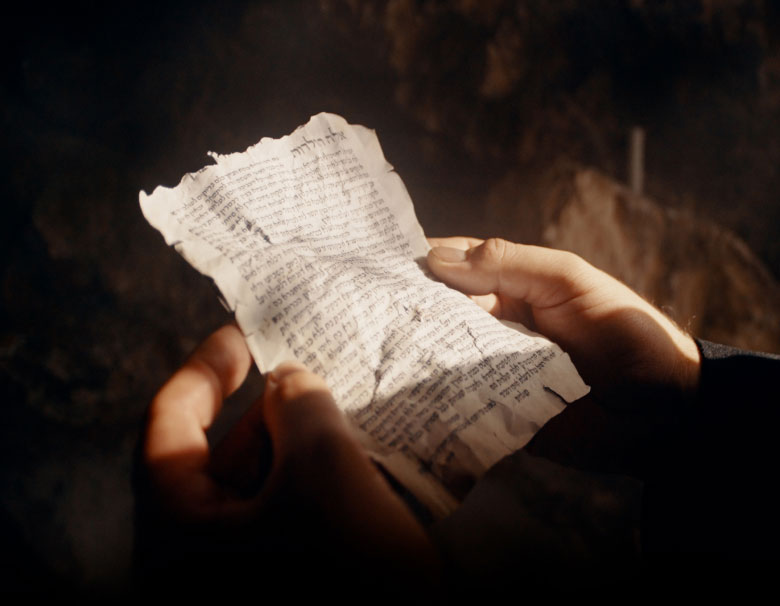
Throughout the Holocaust, Rabbi Daniel experienced miraculous events, often escaping situations that seemed beyond hope. While many around him lost their lives, he miraculously survived numerous dangers. Yet even amidst the darkest of times, his love for Torah burned brightly. Upon returning to Nanas with his stepmother and siblings after the war, they found themselves without any news of their father, who had been taken to labor camps. While others despaired or wandered aimlessly, young Daniel sought out one thing: books. He made his way to the locked and desolate Beit Midrash and managed to find a few torn pages of the Zohar. He seized them eagerly, later saying, "From that moment on, my soul became bound to the Holy Zohar."

As he grew older, Rabbi Daniel dedicated himself to Torah study, adopting various spiritual practices of self-purification as outlined by the Kabbalists. Though he practiced these disciplines in secret, he was once discovered performing the penitential act of rolling in the snow.

A year after his marriage, while he was dedicating most of his time to intense Torah study at the Ungarin Kollel, his Rebbe, the holy Rabbi of Toldot Aharon Zat'zal, called upon him to take on the sacred mission of inspiring faith and reverence for Heaven in the hearts of the Jewish people. In time, Rabbi Daniel authored notable works, including Yemei HaBechirut, a guide for the spiritual growth of young men, and Yom HaChupah, which contains profound teachings for grooms and brides on establishing a faithful Jewish home.

Throughout his life, Rabbi Daniel offered guidance to countless young men and grooms who sought his wisdom before their Bar Mitzvahs or weddings. Remarkably, many of his ethical works were composed during his modest meals.

Over the years, he rose to prominence as one of the great spiritual leaders, dedicating his days and nights entirely to the service of God, beginning his daily schedule with Tikkun Chatzot and continuing in tireless devotion.

In This Room, the Author of Matok Midvash Wrote His Commentary on the Zohar

the hidden wisdom desire

Even from his youth, while most of his study focused on the revealed aspects of Torah, his soul burned with a desire for the hidden wisdom. He eagerly devoured entire pages of the Zohar and the Tikkunim, followed by the study of Etz Chaim and other Kabbalistic texts. By the age of twenty-seven, he had already written a commentary on Sefer Yetzirah. In its introduction, he lamented his low spiritual state and the many personal improvements he still needed to make. For every holy book he studied, he imposed upon himself additional safeguards to distance himself from negative traits that could hinder his spiritual connection. His friends and fellow scholars of Kabbalah attested that he fulfilled all the rigorous conditions outlined by the holy Rabbi Chaim Vital Zat'zal for one who seeks to enter the gates of this wisdom.

Rabbi Daniel often visited the tomb of Rabbi Shimon Bar Yochai in Meron, where he immersed himself in the study of Kabbalah. Despite the harsh conditions at the time, including isolation and swarms of insects, he endured it all, driven by his yearning to grow spiritually in this sacred place.

For about two months each year, he would stay near the tomb of Rabbi Shimon, dedicating most of his day and night to the study of the Holy Zohar. Gradually, he felt the spirit of God stirring within him, enabling him to comprehend previously elusive concepts. The gates of the Zohar and other Kabbalistic works opened before him, and he experienced an extraordinary sweetness, illuminated by a pure and radiant light.

His Work on the Zohar

"During his time at the holy site of Rabbi Shimon Bar Yochai, the idea for his first monumental work, Otzar HaZohar, began to form in his mind. This work serves as a vast index covering all parts of the Zohar, offering thousands of references to both revealed and hidden topics. The compilation was a masterpiece, with hundreds of remaining notebooks attesting to its vast scope and brilliance. It was during this period that the pure idea took shape within him to compose and publish his great commentary, Matok Midvash. This exceptional commentary, spanning 23 volumes, makes the teachings of Rabbi Shimon Bar Yochai Zat'zal accessible and comprehensible to all, serving as the crown jewel among his numerous works dedicated to enlightening the public.

It all began when one day, his revered teacher, the Divrei Emunah of Toldot Aharon, called him and presented him with a densely written manuscript. Rabbi Daniel looked at the manuscript and was moved—it was clear that his teacher had started writing a commentary on the Zohar. His teacher then said: 'I have received a tradition from the Rebbe of Lublin, who told his disciples that before the coming of Mashiach, a Jew will arise who will compose a commentary on the Zohar in a manner accessible to all, thus illuminating the eyes of Israel. I had thought it would be me, and so I began writing, as you can see. However, I now realize that I no longer have the strength for it. Therefore, I appoint you to take on this mission—to write a commentary that will open the gates of the Zohar to all.'

Rabbi Daniel, who had long yearned for such an opportunity, nodded in agreement. His teacher proceeded to list several qualities he wished to see included in the commentary. Among Rabbi Daniel’s many manuscripts, one was found bearing the following note: 'Our Rebbe, Zat'zal, the Divrei Emunah, began writing a commentary on the Zohar in 1978, but later said it was beyond his strength and asked me to undertake the task. However, I did not begin until around 1981, when, with the help of God, we managed to publish the entire Zohar in 22 volumes between 1991 and 2002… Daniel Frisch.’ To begin this sacred work, he meticulously reviewed all the writings of the Ari, accompanied by his close companions. He also joined forces with renowned Kabbalists in Jerusalem, spending six years summarizing the majority of the Ari’s writings.

The Sacred Labor

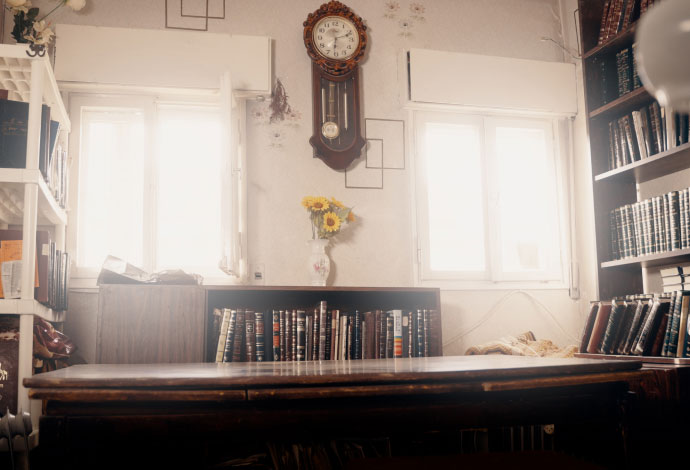
Those familiar with his efforts testified that his writing was not merely a physical act. Despite his frail hands, which appeared incapable of writing more than a few letters, he produced a wealth of sacred works. In this very room, he studied, slept, and wrote ceaselessly, resting for only brief periods each day and devoting the rest of his time to writing amidst towering piles of holy books.

‘He did not write through the “inspiration of the pen,” as some believe,’ said one of Jerusalem’s great scholars, ‘but rather through the inspiration of time itself. Every second of his life was consecrated to serving God.’ While most people waste countless hours, Rabbi Daniel authored numerous books, tirelessly dedicating every moment to his holy mission.

After completing each volume, he would enter his teacher’s study with reverence, saying, ‘I have done as you commanded.’ But there was another purpose to his visit—his teacher would take the book, examine it intently, and then declare passionately, ‘If even one thought in this work is not for the sake of Heaven, it is worth nothing!’ These words deeply impacted Rabbi Daniel, who would internalize them and sit down, with a broken heart, to begin writing the next volume."

Family members recount various events and countless disturbances he faced while working on his monumental commentary on the Zohar, including a car accident, physical collapses, and severe health issues. Between 1991 and 2002, it felt as if their father was battling against nature itself. Each volume he completed left him physically weakened, yet he persevered.

As he often said, ‘The words ratzon, notzer, and tzanur were constantly before my eyes and accompanied me throughout my life, meaning that when a person submits and becomes a “channel” for the Divine will, they are thereby safeguarded from all harm.’ Indeed, Rabbi Daniel merited overcoming all the obstacles placed before him by the forces of evil, emerging victorious to bring his sacred work to the people of Israel. His masterpiece was received with immense gratitude and joy throughout the Jewish world.

לוח שנה ללימוד עמוד היומי בספר הזוהר תשפ"ז